When I first imagined the guardians of planets in Echoes of the Fall, I didn’t see them as rulers. They weren’t gods perched on cosmic thrones or archangels governing systems of order. They were something gentler, stranger, and more personal—witnesses of divine presence who shared in the likeness of the worlds they kept. Each one appeared in the form of the beings who lived there, so that heaven could speak without overwhelming creation.
That decision—to make each guardian look like the life of its planet—reshaped the story. I wanted to write about divinity that descends rather than dominates. A being who could dwell among living things as an ambassador, as a reflection of God’s love.
The Purple Guardian of Venus
Sembar, the guardian of Venus, reflects the people she is assigned to manage. Her skin carries their same violet hue, her eyes shimmer with that same refracted light that characterizes the Venusians themselves. She is not a projection or a disguise; she is of that world in both color and tone.
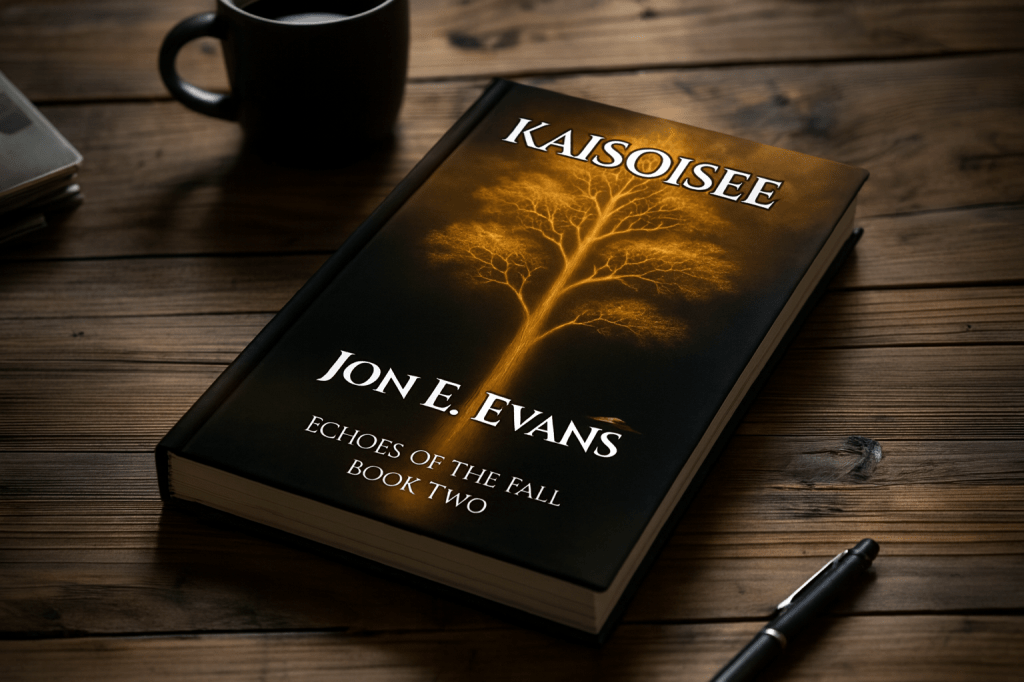
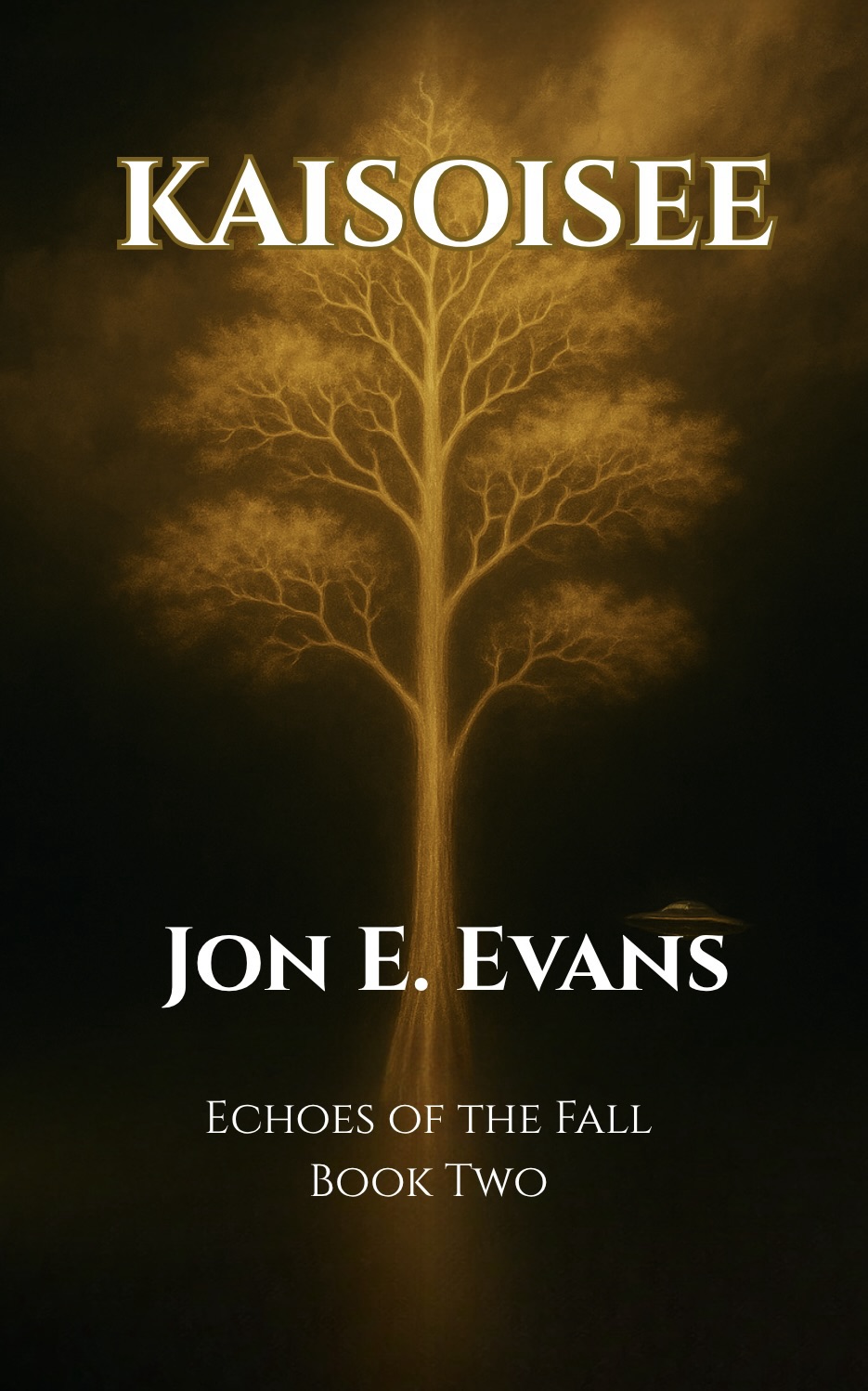
In the early drafts of Kaisoisee, I had written a more traditional celestial hierarchy—thrones and hosts, archangels presiding over planetary dominions. It sounded majestic but was too much to manage. There was a difficulty in following the Bible exactly as it was written for Angels. When I replaced hierarchy with one creature at the head speaking on behalf of God, I felt the story begin to breathe.
Sembar’s design came from that shift.
The Feminine Echo
Readers sometimes ask why Sembar is portrayed with feminine traits when angels, traditionally, have no gender but are given masculine terms. The answer is part homage, part conviction.
C.S. Lewis’s Perelandra imagined Venus as a feminine planet—the world of obedience and joy. His Green Lady embodied the beauty of unfallen creation, a voice of awe and innocence. I didn’t want to replicate her, but I wanted to honor that vision of holiness expressed through my story.
Sembar’s femininity isn’t about gender; it’s about texture. Her voice carries warmth even when she speaks of judgment. Her movements are precise but never rigid. She represents a side of the divine that is protective, nurturing, and yet still terrifying in its power. I wanted readers to feel that paradox: that mercy can be as blinding as wrath.
None of the celestial beings in Echoes of the Fall series have gender. They don’t reproduce, and they don’t belong to any human binary. Yet I use pronouns—because language itself is a human limitation. We can’t describe personhood without them. Pronouns, in my writing, are a concession to the reader’s mortality—a reminder that every encounter with the divine is filtered through the grammar of the finite.
A Quiet Nod to Lewis
Sharp-eyed readers may have caught a reference in the first chapter to a man named Weston—another small nod to Lewis’s Space Trilogy. Weston’s story is one of intellectual arrogance, a man who sought divine knowledge without humility. Mentioning him was my quiet way of saying that Kaisoisee walks the same perilous border: between revelation and hubris, between faith and control.
Closing Thoughts
What emerged from all this—color, form, and femininity—was not a revision of doctrine but an imaginative meditation on it. Sembar isn’t meant to redefine angels or rewrite theology. She’s meant to echo something Scripture has always whispered:
That God clothes Himself in forms we can bear.
That His messengers are meant to serve His purposes in our lives.
That the divine does not need to shout to be overwhelming.
Sembar stands as a witness to that truth: terrible and tender, radiant and restrained. A guardian not because she dominates, but because she reminds us of our smallness.
If she leads readers back to wonder—and maybe even back to Scripture—then she has fulfilled her purpose. And so have I.

 Jon E. Evans | Science, Story & the Soul
Leave a comment